1 min read
Charging Walmart’s Sparky: The Brand Playbook for AI-Powered Shopping
What Is Walmart’s Sparky? Walmart’s Sparky is the company’s AI-powered shopping assistant accessible via the Walmart mobile app. Unlike traditional...

2 min read
John Warren
:
07/27/2026
Walmart is finally making strides to modernize its advertising offering. Negative keyword targeting, rolling out July 29th, is the headline move, but it's not the only one. Less marketed to advertisers, Walmart also recently reduced the minimum bid on Sponsored Video campaigns from $0.80 to $0.50.
To us, these moves signal that Walmart is listening to its customers. They make it easier for modern advertisers and agencies, many of whom built their playbooks on competitors like Amazon, to transfer those strategies to Walmart and succeed there. Just as importantly, they give advertisers and agencies more confidence in the reporting and metrics they're presenting, whether that's to leadership, to clients, or just to themselves.
Negative keywords are the bigger of the two updates, so that's where we're focusing here. On July 29th, Walmart is rolling out negative keyword targeting for Walmart advertisers. It's a small feature with a big impact: brands will finally be able to remove keywords that are getting duplicate bids across their manual and automatic campaigns, or clean up terms the algorithm has picked up that just aren't relevant, or aren't performing, for a given product or brand.
We've been thinking through how brands should approach this once it's live, and we wanted to share our early recommendations.
If you run both manual and automatic Sponsored Search campaigns today, you've probably run into this problem: the algorithm behind automatic campaigns often picks up terms your manual campaigns are already bidding on. That overlap inflates auto campaign performance and muddies the picture of what's actually driving results, including your true return and true new-to-brand impact. Negative keywords give advertisers a direct way to fix that.
1. Remove branded terms from automatic campaigns. This is the easiest lift and the one we'd expect most brands to act on first. Branded search volume is typically strong regardless of targeting, so letting your automatic campaigns keep bidding on your own brand name inflates performance without telling you much. Excluding branded terms from auto campaigns is a quick, low-risk way to get a cleaner read on what auto is really contributing.
2. Remove your top manual keywords from automatic campaigns. This one takes a bit more work but is still fairly straightforward. Identify the keywords driving the most spend and traffic in your manual campaigns, and exclude those specific terms from your automatic campaigns. If you're a pet brand and "dog treats" or "dog chew" are driving significant manual spend, pulling those terms out of auto gives you a clean source of truth on whether impressions are coming from manual or automatic targeting, without the effort of excluding your entire manual keyword list.
3. Fully exclude all manual terms from automatic campaigns. This is the most involved approach, and one we'd treat as a test rather than a day-one move. Excluding every manual keyword from auto turns your automatic campaigns into a pure keyword-harvesting engine, and it also frees them up to capture ad placements manual campaigns simply can't reach: homepage, checkout, and certain carousel placements like deal pages. We'd recommend testing this on specific campaigns first and watching how performance shifts before rolling it out broadly.
The real unlock here isn't just excluding keywords once. It's building a continuous loop. That means partnering with an agency or building internally to automate keyword harvesting through an API tool like Pacvue: pull the keywords your automatic campaigns are converting on, move them into manual campaigns, and then exclude those same terms from automatic campaigns going forward.
That's the piece we're most focused on. Podean will be testing all three approaches above with our advertisers, but the bigger investment for us is layering in the automation to keep pulling converting keywords out of automatic campaigns and into manual, on an ongoing basis, as negative keyword targeting rolls out.
Reach out to us to learn more about how Podean can unlock Walmart Connect for you.
1 min read
What Is Walmart’s Sparky? Walmart’s Sparky is the company’s AI-powered shopping assistant accessible via the Walmart mobile app. Unlike traditional...
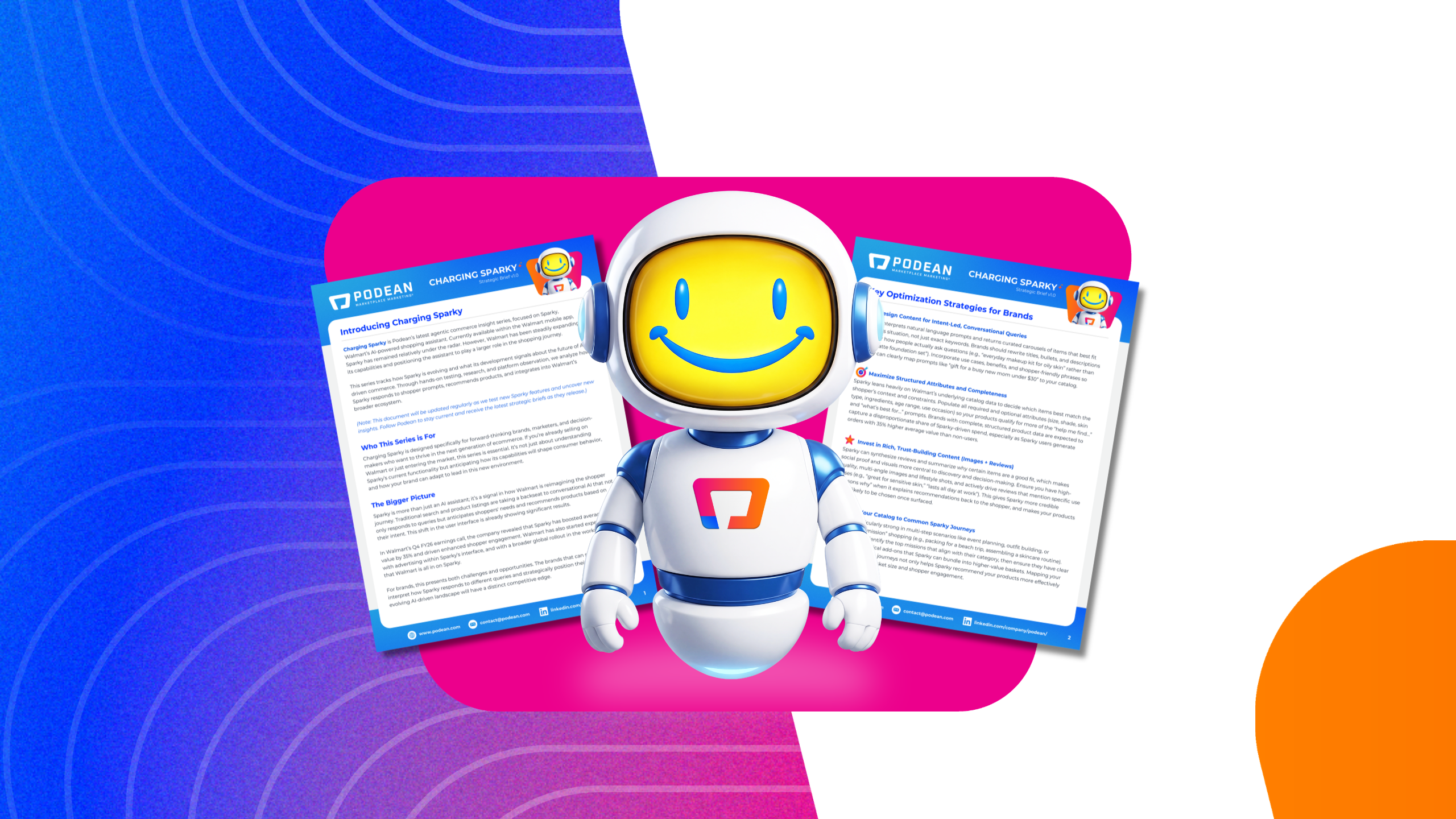
From Search Bars to ‘Conversations’ The way we shop online is changing.
Walmart’s Summer High Traffic Event, Walmart Deals, has become one of the most important moments of the year for brands selling on the platform. With...