2 min read

Charging Sparky: Your Guide to Walmart’s AI Shopping Assistant

Charging Sparky: Your Guide to Walmart’s AI Shopping Assistant
From Search Bars to ‘Conversations’

The way we shop online is changing.

Consumers are moving away from traditional search bars and endless pages of product listings towards conversational AI shopping agents. Instead of typing keywords and scrolling through results, shoppers can now describe exactly what they need and receive curated product recommendations instantly.

While Amazon’s Rufus has been at the forefront of this shift in agentic commerce within retail, another AI assistant from one of the world’s largest retailers has quietly flown under the radar: Walmart’s Sparky.

Accessible via the Walmart app, Sparky is a generative AI shopping assistant designed to help customers search, compare, and discover products through natural conversation. It can answer questions, recommend and compare items, and guide shoppers toward purchase decisions.

It’s clear that Walmart is positioning Sparky at the center of the shopping journey, and early signals suggest that it could reshape or eventually replace traditional search within the platform.

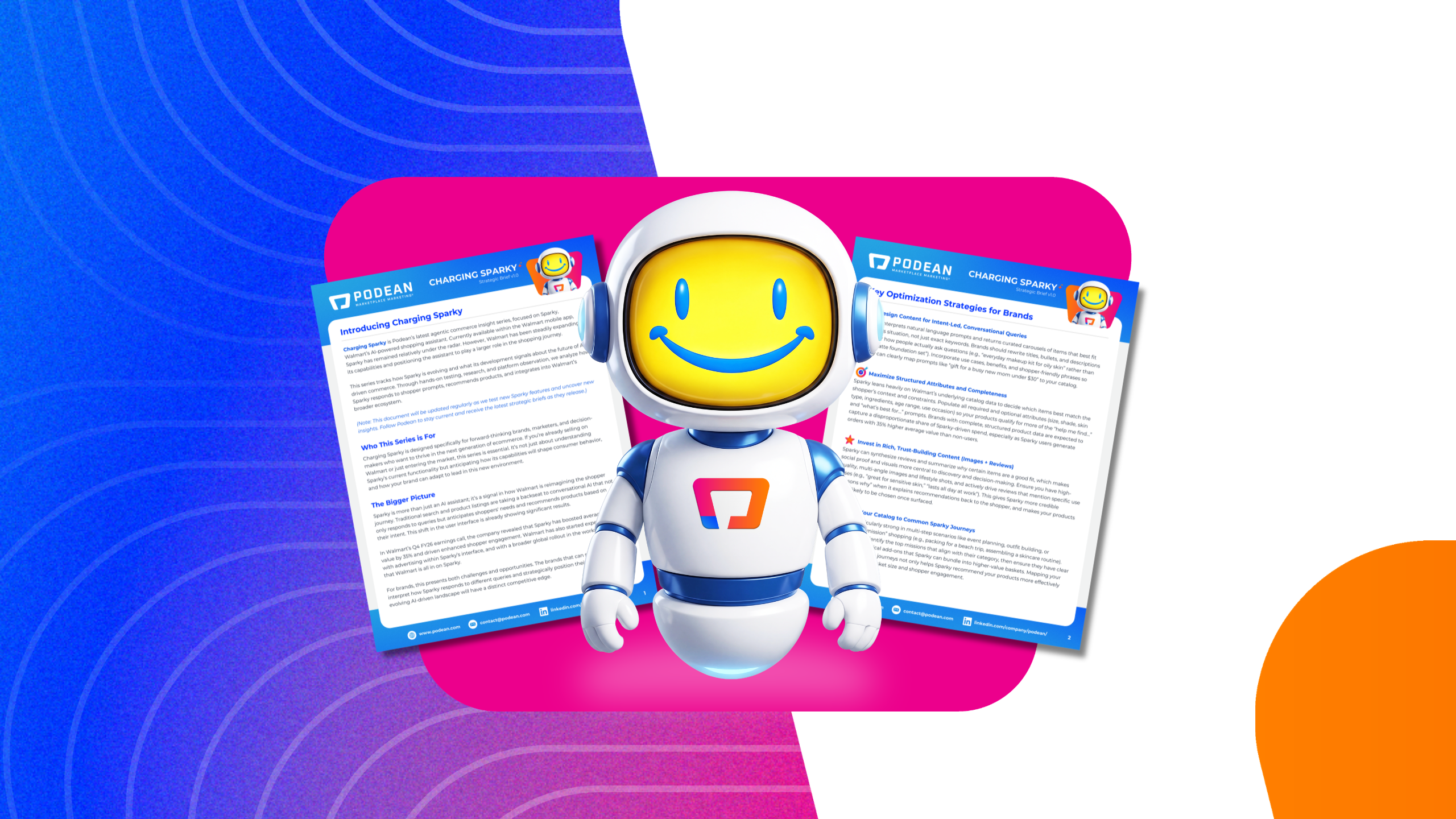
Introducing Charging Sparky

To help brands navigate this shift, we’re launching Charging Sparky, a new content series dedicated to understanding how Walmart's AI assistant works and how brands can optimize for it.

As conversational AI becomes a new layer between shoppers and products, the dynamics of ecommerce discovery are changing. Brands need to think beyond traditional search optimization and begin understanding how AI assistants interpret queries, select products, and generate recommendations.

In this series, we will cover:

  • New features and updates in Sparky as they roll out
  • Insights from our testing and research on how Sparky recommends products
  • The data signals and content that influence its responses
  • Shopper behavior patterns in AI-assisted discovery
  • Actionable strategies for optimizing brand visibility on Walmart

Our goal is simple: translate our learnings from Sparky into practical guidance brands can use right now.

Why Brands Should Pay Attention

Walmart has made it clear that they are fully committed to Sparky. Open the Walmart mobile app, and "Ask Sparky" is front and center, impossible to miss. The company also announced earlier this year that it is now actively testing ads within Sparky, following an initial pilot in the fall of last year.

The early results are already notable. During its Q4 FY26 earnings call, Walmart reported that Sparky has increased average order value by 35% and driven higher engagement. A global rollout is also in the works.

As Sparky becomes more deeply embedded in the shopping experience, its influence over how shoppers discover brands and products, and ultimately what they buy, will only grow.

Understanding how AI assistants shape product discovery won’t just be a “nice to know.” It will quickly become a competitive necessity.

Don’t Fall Behind – Start Charging Sparky today!

Follow along as we document what’s working, what’s changing, and what brands need to do right now to stay ahead of AI-driven ecommerce on Walmart.

Follow our page on LinkedIn, and let's charge Sparky together.


Walmart's Strategic Pivot: Abandoning Retail Media Tech Ambitions

Walmart's Strategic Pivot: Abandoning Retail Media Tech Ambitions

In a surprising move that has caught the attention of retail and advertising experts alike, Walmart has abruptly halted its efforts to provide adtech...

Read More
Amazon and Walmart in Close Competition in Latest Marketplace Polling

Amazon and Walmart in Close Competition in Latest Marketplace Polling

In the ever-evolving landscape of retail giants, Amazon, Walmart, and Target stand towering above the rest, each commanding a substantial share of...

Read More
The Marketplace Change Tracker: The Only Source You Need for All Marketplace Updates

The Marketplace Change Tracker: The Only Source You Need for All Marketplace Updates

In the fast-paced world of retail, something is always changing—an Amazon algorithm update here, a new seller policy there, or a platform-wide...

Read More