3 min read

Charging Walmart’s Sparky: The Brand Playbook for AI-Powered Shopping

Charging Walmart’s Sparky: The Brand Playbook for AI-Powered Shopping
 
What Is Walmart’s Sparky?

Walmart’s Sparky is the company’s AI-powered shopping assistant accessible via the Walmart mobile app. Unlike traditional search, Sparky uses conversational AI to understand shopper intent, generate product recommendations, and anticipate follow-up questions.

For example, when a shopper asks:

  • “What are the best wireless headphones for working from home?” 

  •   “Gift ideas for a busy new mom under $30”   

Sparky doesn’t just show a list of products, it analyzes the query, maps it to catalog attributes, and surfaces curated items tailored to the shopper’s needs. This shift in Walmart’s user interface is already influencing conversion, basket size, and shopper engagement.

In Walmart’s Q4 FY26 earnings call, the company reported that Sparky-driven orders generated 35% higher average order value and increased engagement metrics across categories. Brands that understand how Sparky interprets queries and optimize accordingly will gain a significant advantage

 
Why Rufus Changes Everything for Amazon Brands

Traditional Amazon SEO was about keyword density, conversion rate, and sponsored placement. Rufus operates on a fundamentally different logic. It rewards:

  • Completeness: no gaps in specs, use cases, or compatibility

  • Structure: normalized, machine-readable data

  • Evidence: claims backed by attributes, reviews, or Q&A

  • Intent relevance: content answering real shopper questions

Persuasive copy alone won’t compete. Brands must architect listings as queryable databases.

 
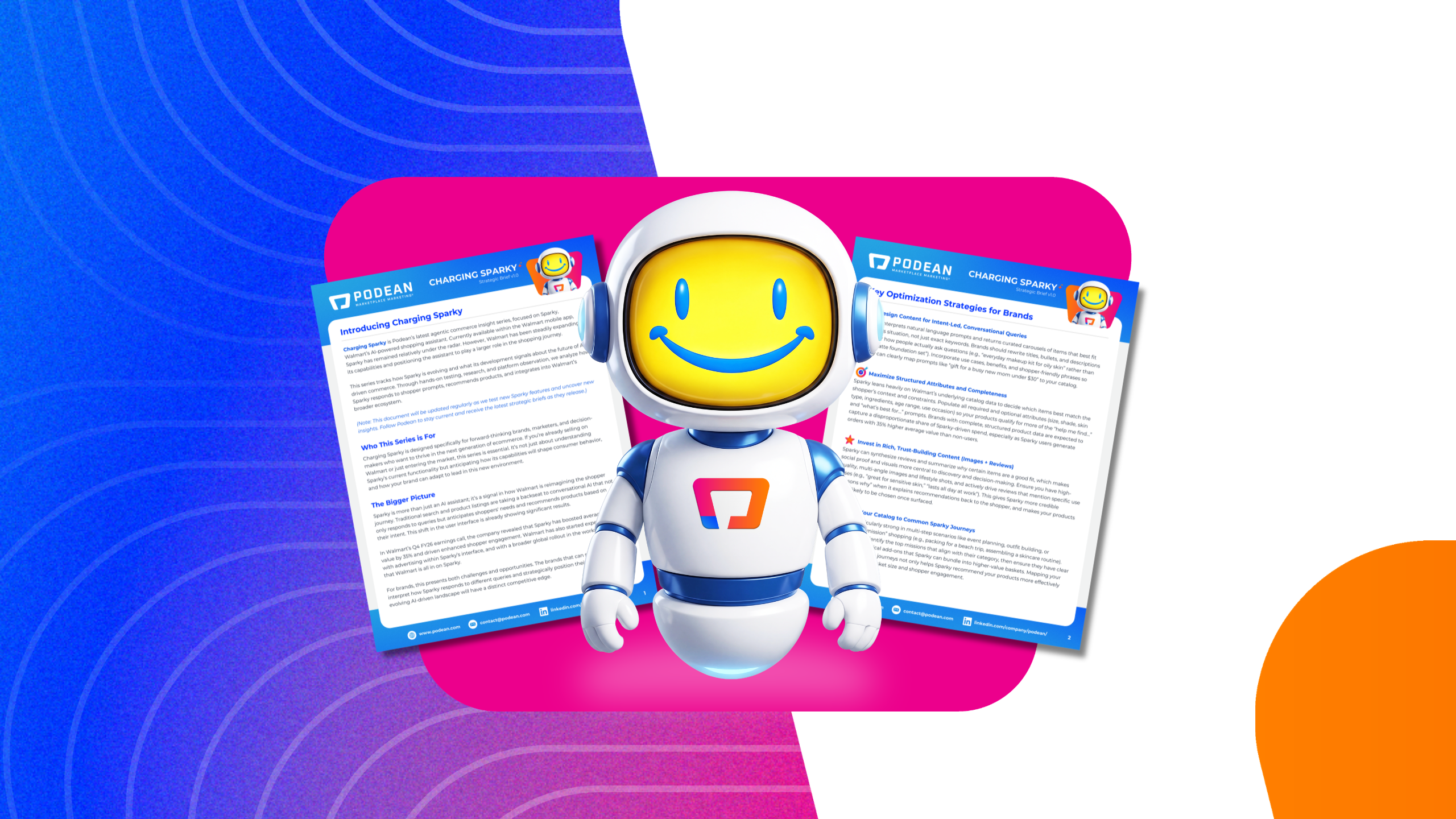
Key Optimization Strategies for Brands

1.  Design Content for Intent-Led, Conversational Queries

Sparky interprets natural language prompts rather than just exact keywords. Brands should:

  • Rewrite titles, bullets, and descriptions in shopper-friendly phrasing (e.g., “everyday makeup kit for oily skin” vs. “matte foundation set”).
  • Include use cases, benefits, and personas to help Sparky map queries like “starter skincare routine for teens” to your catalog.
  • Focus on intent-driven content, not just keyword stuffing, so your products appear in curated recommendations.

2. Maximize Structured Attributes and Catalog Completeness

Sparky relies heavily on Walmart’s structured catalog data to match products to shopper scenarios. Brands should:

  • Populate all required and optional attributes: size, color, age range, use occasion, ingredients, and skin type.

  • Maintain consistent units and clean identifiers across SKUs to avoid retrieval errors.

  • Complete catalogs lead to higher eligibility for “help me find…” or “best for…” prompts, boosting visibility for Sparky-driven discovery.

3. Invest in High-Quality Images and Reviews

Sparky synthesizes reviews and visuals as evidence when explaining product recommendations. Brands should:

  • Provide multi-angle images, lifestyle shots, and instructional media.

  • Encourage reviews mentioning specific use cases (e.g., “lasts all day at work,” “gentle for sensitive skin”).

  • Combine strong imagery with detailed reviews so Sparky has credible “reasons why” to recommend your products.

4. Map Your Catalog to Common Sparky Shopping Journeys

Sparky excels at multi-step shopper journeys, like event planning, skincare routines, or “complete the mission” scenarios. Brands should:

  • Identify hero SKUs and logical add-ons for each journey.

  • Structure bundles or recommendations so Sparky can create high-value baskets.

  • Align assortments to real-world use cases to maximize both engagement and order value.

5. Continuously Test Prompts and Tune Content

Sparky evolves rapidly, so brands must treat it as a living algorithm:

  • Test category-relevant prompts (e.g., “Walmart alternatives to prestige mascara”).

  • Track which SKUs appear, how often, and in what order.

  • Refine titles, attributes, and visuals based on prompt performance to maintain visibility.

6. Win Sponsored Prompts with Retail Media 2.0

Walmart Connect’s Sponsored Prompts embed ads directly into Sparky’s conversational flow:

  • Ads appear contextually (e.g., surfacing your serum for “best hormonal acne treatment”).

  • Item Content Quality (ICQ) is essential: Sparky must parse titles, attributes, and descriptions into a coherent recommendation.

  • Prioritize organic catalog excellence before bidding. Sparky users treat it as primary discovery, so these placements are high-conversion opportunities.


Frequently Asked Questions (FAQ) About Sparky
Q: How does Sparky differ from traditional keyword-based search?
A: Traditional search relies on Keyword Matching and sales velocity to rank products. Sparky is a Retrieval-Augmented Generation (RAG) system that synthesizes conversational answers. It prioritizes "Answerability" or how well your product’s structured data matches the specific intent of a shopper’s natural language prompt.
 
Q: What is the difference between Sparky and Marty?
A: Within Walmart's AI ecosystem, Sparky is the customer-facing shopping assistant. Marty is the partner-facing "Advertising Assistant" designed to help sellers and agencies manage Walmart Connect campaigns, troubleshoot Item Content Quality (ICQ) issues, and optimize retail media spend.
 
Q: How can brands appear in Sparky’s "Recommended" suggestions?
A: Eligibility is determined by Item Content Quality (ICQ) and Structured Attribute completeness. Brands must populate every backend field, from "intended use" to "ingredients", to ensure Sparky has the "Machine-Readable" data required to retrieve the product during a conversational session.
 
Q: What’s the biggest mistake brands make with Sparky?
A: Focusing only on keyword-optimized copy. Without structured, complete, and normalized catalog data, Sparky may overlook your products entirely.


The Bottom Line: Preparing for Sparky in 2026

Sparky is not just a new search tool; it’s a fundamental shift in Walmart’s discovery ecosystem. Winning brands:

  • Structure content for intent-driven AI queries.

  • Maintain complete, normalized catalog data.

  • Integrate high-quality images, reviews, and journey-based product mapping.

  • Continuously monitor and tune performance against evolving prompts. 

Brands that invest in these strategies now will secure a competitive edge in AI-driven retail, maximize basket size, and capture more revenue from Sparky-driven orders.

 
Is Your Brand Sparky-Ready?

Transitioning from Keyword Search to Agentic Commerce requires a fundamental shift in catalog architecture. Podean provides the global retail media strategy and technical data frameworks needed to win in Walmart’s AI-driven ecosystem.

Don't wait for the search bar to disappear. Connect with the Podean team at podean.com/contact to learn how your brand can win on Sparky. 


Charging Sparky: Your Guide to Walmart’s AI Shopping Assistant

Charging Sparky: Your Guide to Walmart’s AI Shopping Assistant

From Search Bars to ‘Conversations’ The way we shop online is changing.

Read More
Walmart's Strategic Pivot: Abandoning Retail Media Tech Ambitions

Walmart's Strategic Pivot: Abandoning Retail Media Tech Ambitions

In a surprising move that has caught the attention of retail and advertising experts alike, Walmart has abruptly halted its efforts to provide adtech...

Read More
Amazon and Walmart in Close Competition in Latest Marketplace Polling

Amazon and Walmart in Close Competition in Latest Marketplace Polling

In the ever-evolving landscape of retail giants, Amazon, Walmart, and Target stand towering above the rest, each commanding a substantial share of...

Read More