 Michael Seymour
Amazon’s Fee Shift: Big Win for EU Apparel Brands
Amazon has recently implemented a significant change to its fee structure in Europe and the UK that could substantially benefit apparel brands...

Every Prime Day, the headlines focus on one number: sales.
This year, that number was essentially flat.
Overall sales increased just 1.5% year over year. That's not the kind of growth most brands hope for during Amazon's largest shopping event, and what we have observed historically.
The bigger story is why sales remained relatively flat.
Looking across our Prime Day performance database, three metrics immediately stood out:
Taken together, these metrics suggest that higher pricing helped offset softer shopper demand.
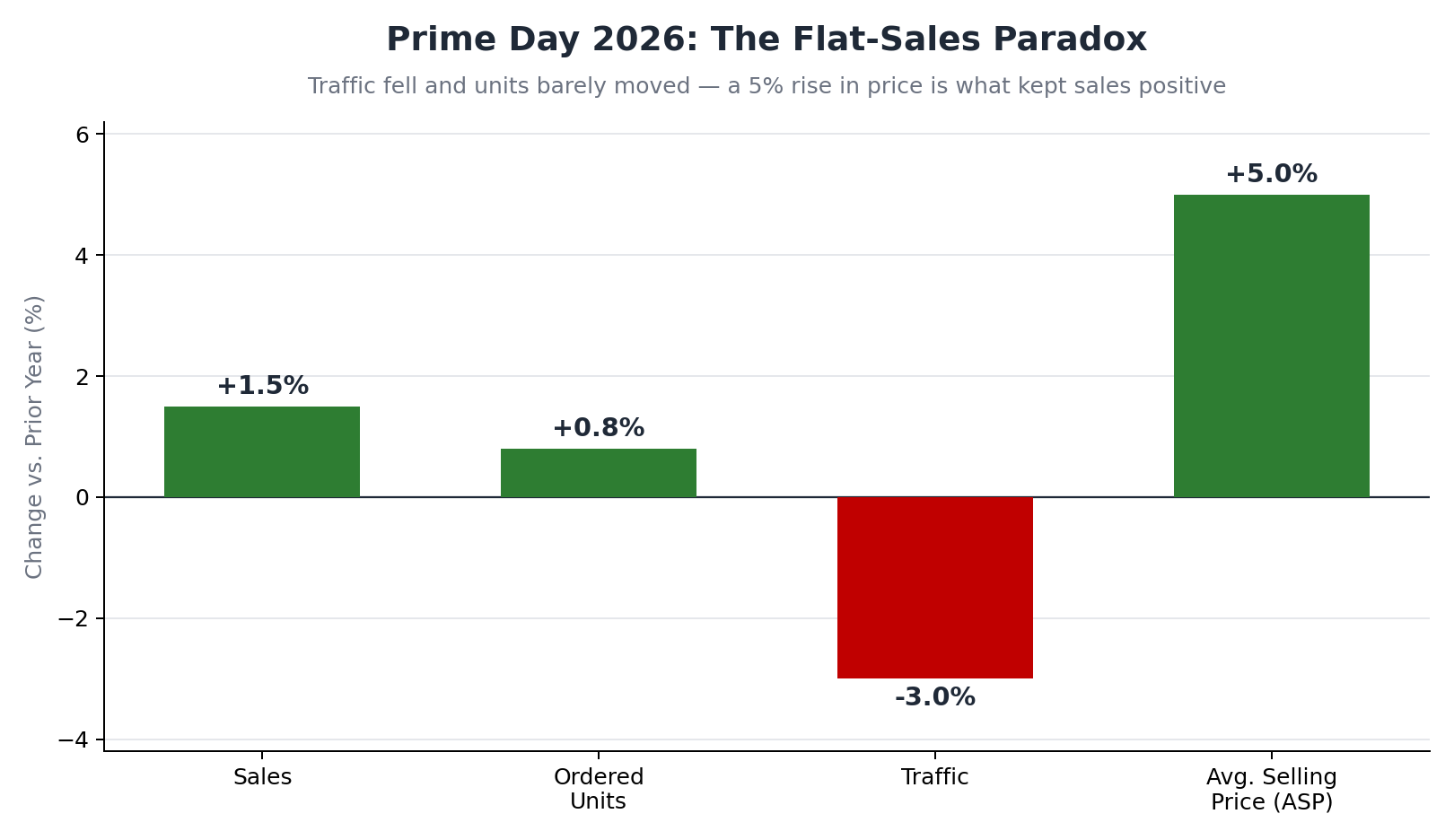
If Prime Day had attracted significantly more shoppers, I'd expect to see stronger traffic and unit growth.
Instead, ordered units increased just 0.8%, while traffic declined 3%. Meanwhile, ASP increased 5%.
To me, this suggests that pricing—not demand—was the primary factor keeping overall sales flat.
That's an important distinction.
Brands didn't necessarily sell substantially more products. They generated roughly the same level of revenue despite fewer shoppers arriving on Amazon.
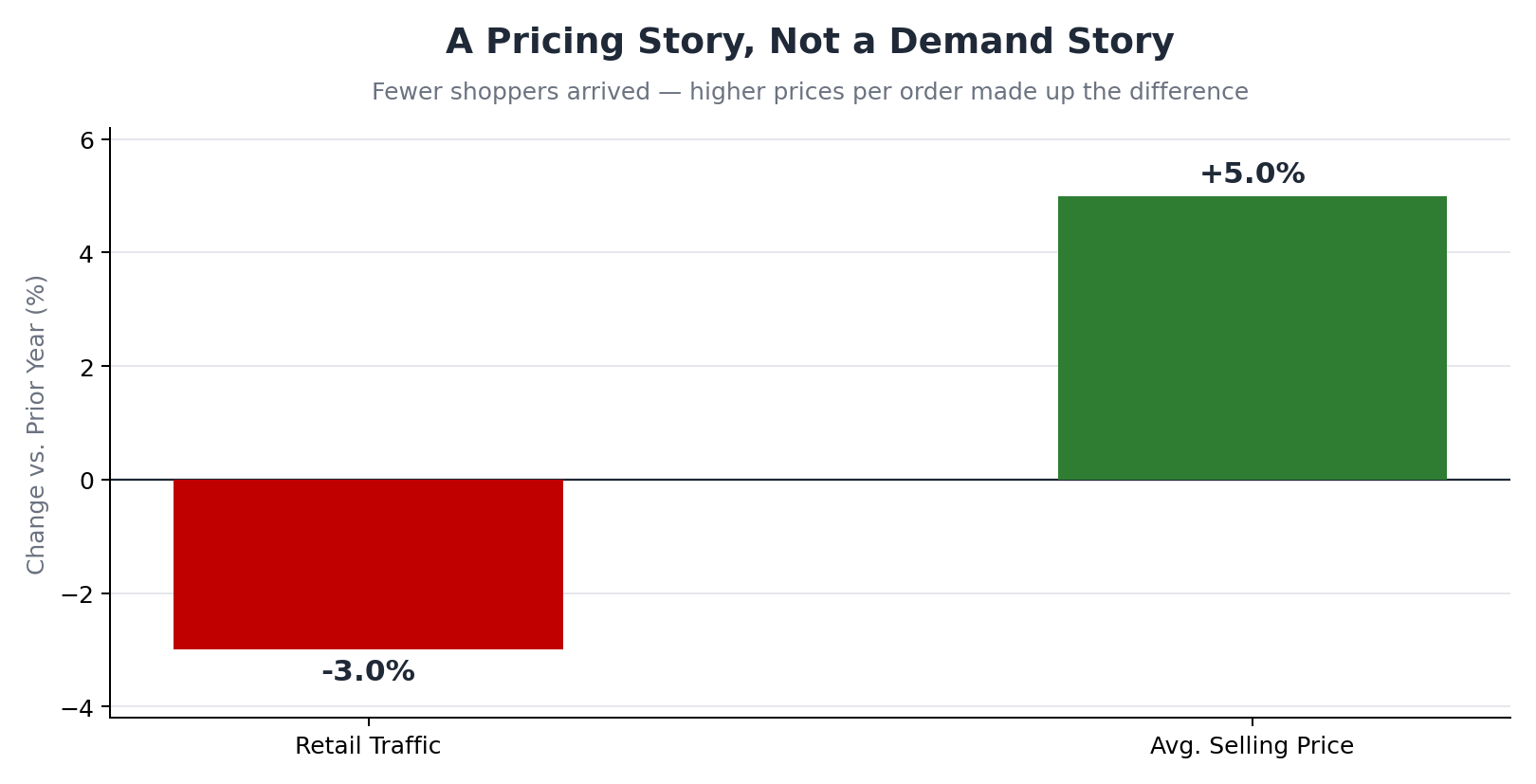
The decline in retail traffic may be the most overlooked metric from this year's event.
A 3% decline doesn't sound dramatic, but during the largest ecommerce event of the year, it matters. It means brands were competing for a smaller pool of shoppers than they did last Prime Day.
That changes the conversation.
Success isn't just about increasing ad spend or offering deeper discounts. It's about maximizing every visit through better retail execution—stronger content, competitive pricing, compelling creative, inventory readiness, and efficient conversion.
If traffic continues to soften in future Prime Day events, brands that focus solely on acquiring more traffic may find diminishing returns.
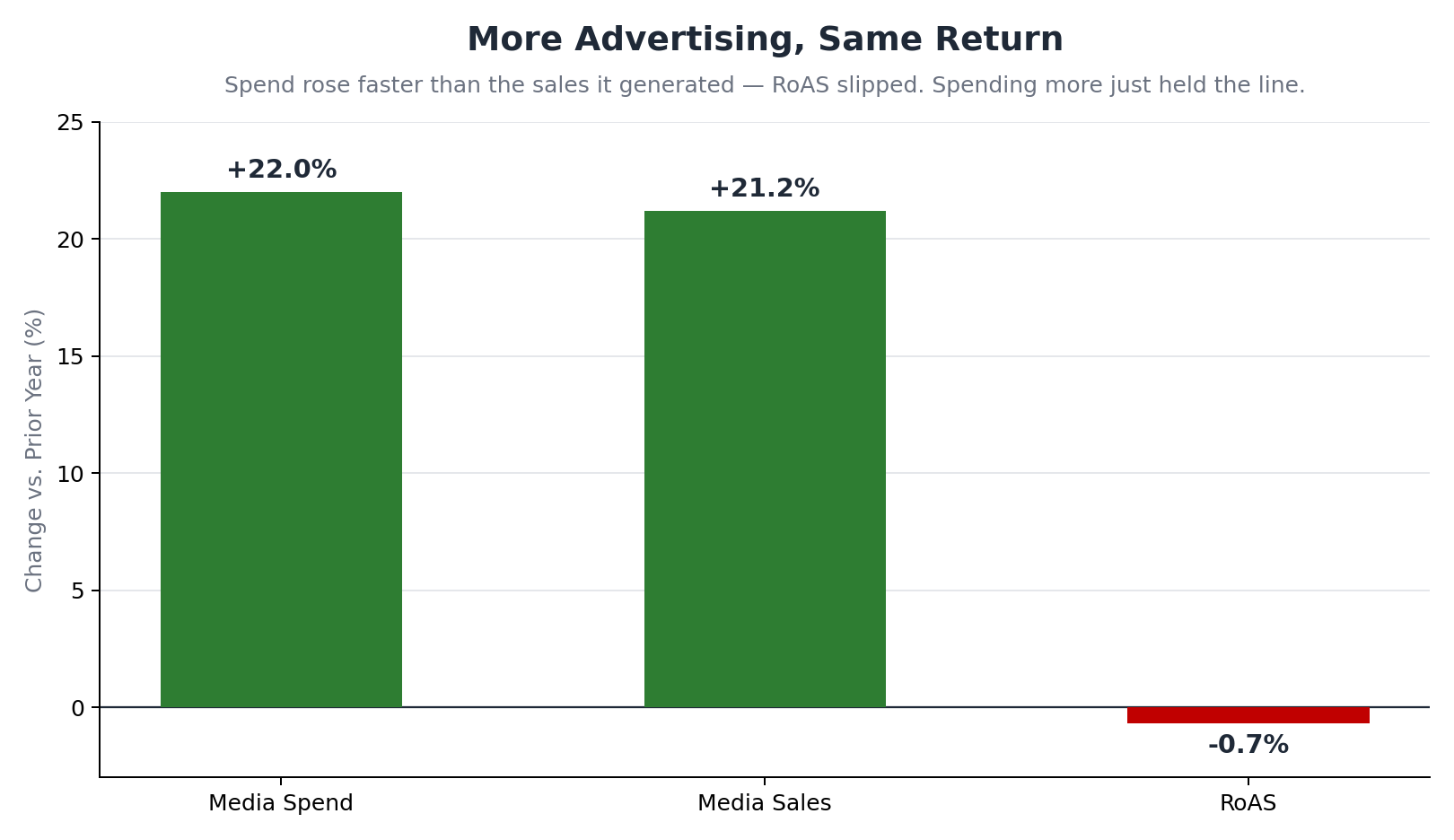
Brands responded to the competitive environment by investing more in advertising.
Media spend increased 22%, while media-attributed sales increased 21%. ROAS declined slightly.
That's not necessarily poor performance, but it does reinforce a trend that's becoming harder to ignore.
Spending more is becoming the cost of maintaining performance—not necessarily improving it.
As competition intensifies, incremental advertising dollars are working harder just to deliver similar outcomes.
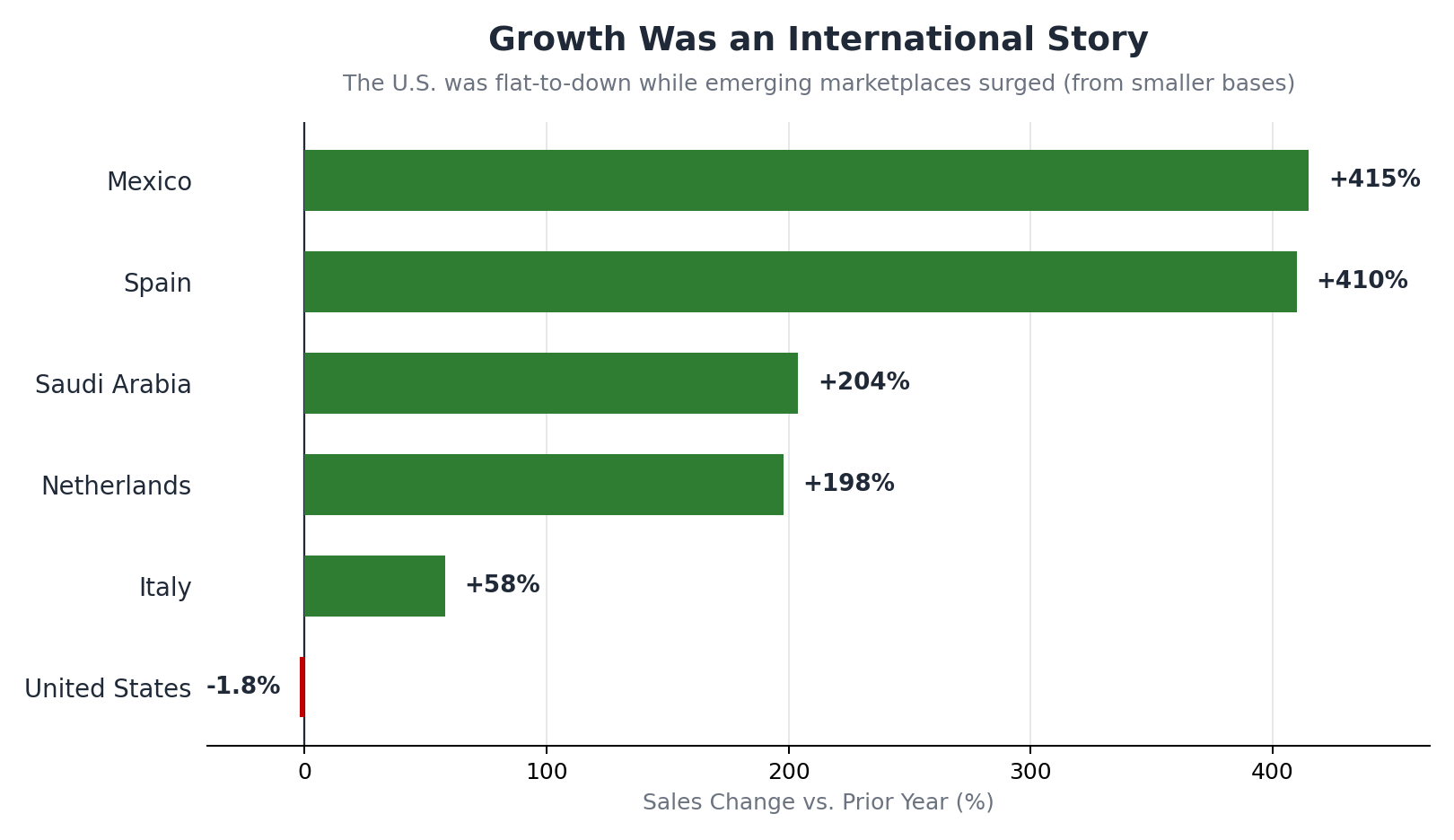
While the U.S. delivered a relatively flat performance, several international marketplaces posted exceptional year-over-year gains, including Mexico, Spain, Saudi Arabia, Italy, and the Netherlands.
Those markets are growing from smaller bases, so triple-digit growth should be interpreted carefully. Still, they reinforce an important point: the biggest opportunities aren't always in the most mature marketplaces.
Brands looking beyond the U.S. may find that future Prime Day growth comes from expanding internationally rather than fighting for incremental share in an increasingly competitive domestic market.
Zooming into performance by category shows just how uneven this Prime Day was beneath the topline. A handful of categories grew, several declined, and the direction rarely matched the overall flat number.
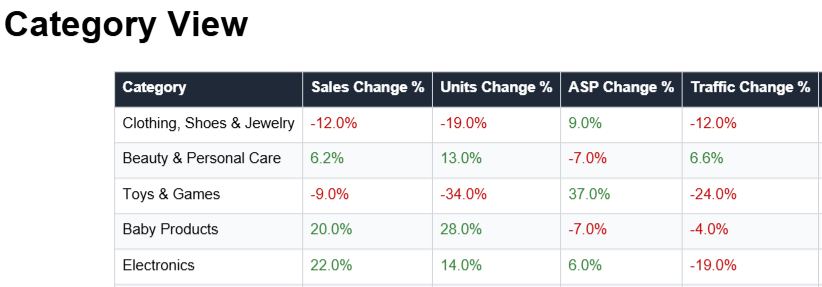
The spread here reinforces the same theme: this wasn't a rising-tide event. Category-level winners and losers diverged sharply, and where sales held up, it was often price doing the work rather than unit demand.
Flat sales could easily be interpreted as business as usual, but once you look beneath the surface, the data suggests that higher average selling prices helped offset declining traffic and largely unchanged unit volume. Additionally, there is an unspoken instability in the air right now surrounding consumer shopping behavior. While this report isn’t a representation of this, there may be external economic conditions impacting the ability for 2026 Prime Day growth YoY (especially if average selling prices were higher than last year).
For next year’s event and the rest of 2026, if you are running promotions:
Plan for efficiency. Plan for conversion. And recognize that maintaining performance may require a fundamentally different playbook than it did just a few years ago.
Data reflects our managed portfolio, comparing Prime Day 2026 (June 23–26) to Prime Day 2025 (July 8–11). All figures shown as percentage change versus the prior comparable period.

Amazon has recently implemented a significant change to its fee structure in Europe and the UK that could substantially benefit apparel brands...
.jpg)
 Daniela Rincon : 07/28/2026
With both events less than a month apart, here’s how traffic, conversion, and spend played out — category by category.

Guess the date Amazon Prime Day 2020 commences and its duration. If you win, Podean will donate $250 to a Covid-19 charity of your choosing.